
Aperture
Introduction and Context:
Completed as a part of the curriculum of the CareerFoundry Product Immersion, the Aperture case study places us in the shoes of a new product manager who has joined a picture and video based social media company. An issue has recently arisen regarding declining active monthly users and more specifically around the concept of advertisement labeling. This project showcases the process of categorizing the problem, constructing potential solutions, and considering their impact on our developing product.
1. Identifying the Problem
We are given some information on user trends and inclinations in the project brief via the form of user data and competitor information.

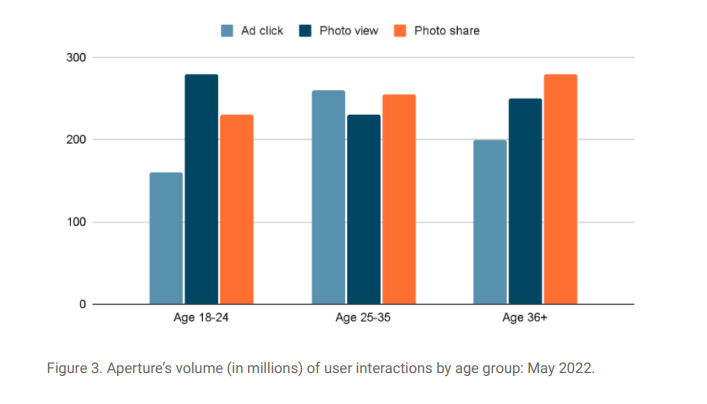
When we consider the especially low ad click interaction within the 18-24 demographic and our recent change to labeling, it is pointing towards that group being especially discouraged with the recent change to the ad labeling design. Considering this group is considered our core demographic, this is a vital group to retain. An exodus of customers is especially detrimental as data shows that a peer base is vital for all age groups.
If we dig in further into user sentiments a pattern soon begins to emerge when we cross index this with competitor information:
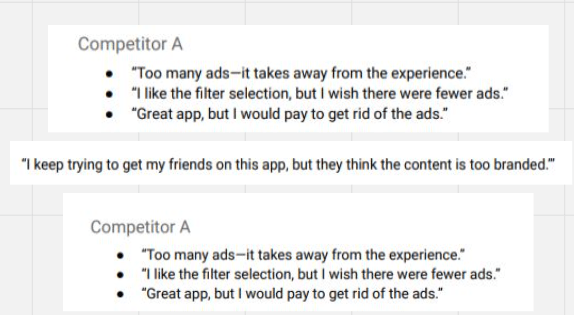
Users don’t mind ads, they simply want to see ads that don’t feel out of place to them, as made clear by review snippets from Competitor A which is experiencing clear and steady growth. Appropriate labeling is essential to meet that criterion.
2. Conceptualizing a Solution

2. Peer Group Problem
3. User Concerns Regarding Security
4. Platform Stability
With the data pointing us towards four potential solutions, we employed an Impact Grid in order to determine which path of development would potentially have the highest level of effect on the problem we are tasked to solve.

It becomes clear that by implementing an appropriate ad labeling scheme, we would be able to retain our core user demographic as well as address the problem of a disappearing community.
The first step of identify a potential solution is to take on the role of the potential user in order to identify needs and wants.
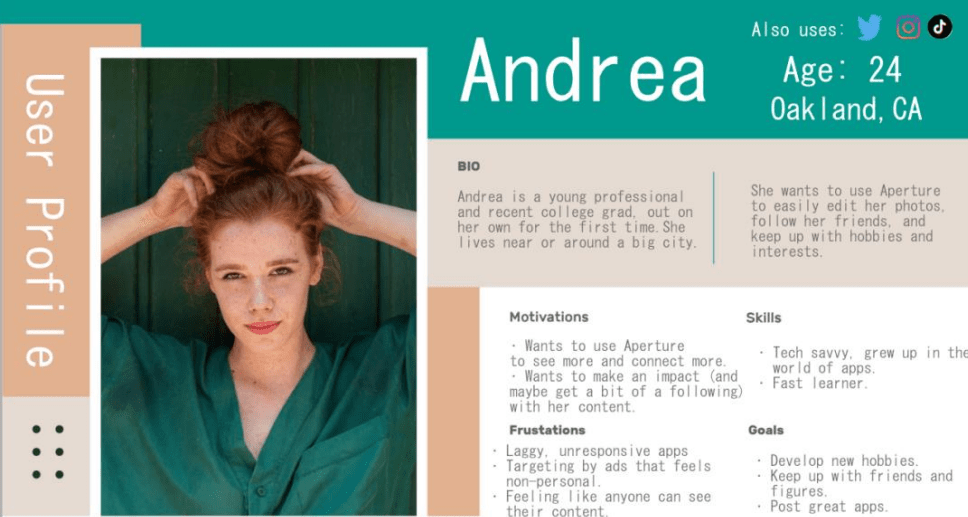
With this potential user in mind, we can move onto establishing our functional product principles:
- The ad design system shall display our newly designed ads during the user’s scroll through their feed.
- The new design shall blend into the feed design wise and not stand out against it.
- When the advertisement is viewed, clicked, or has any other interaction with the user, the
action is recorded and inputted into an analytical system for us to view. - The number of advertisements displayed to the user shall be limited to an amount we will
define through analytics. - The ad label design shall display all necessary information in the most expedient way
possible. - The ad label design shall differ for different lengths and formats of advertisement.
- The ad will allow a mechanism for allowing feedback from the user.
We then move to Figma in order to product our minimum viable products for user testing.
2. Prototyping + Testing
We established a preliminary prototype in order to test its predicted appeal with our user base.
- Our primary goal is to configure a design for filters that make them easy and attractive to
use, thus making any and all users feel like filters are a feature they can access. - We want users to be able to browse, preview, and choose filters in a fast and expedient
manner. - We want users to feel like the degree of customizability is as such that it fits the majority of
their needs.
Round 1:
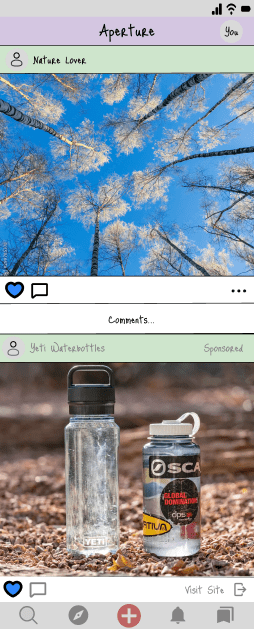
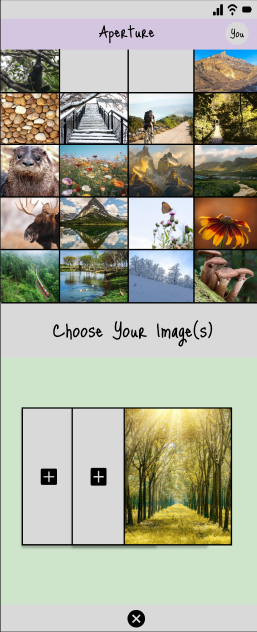
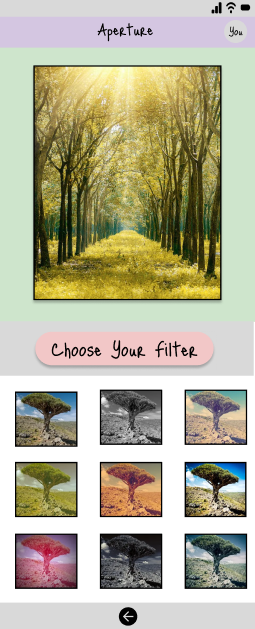
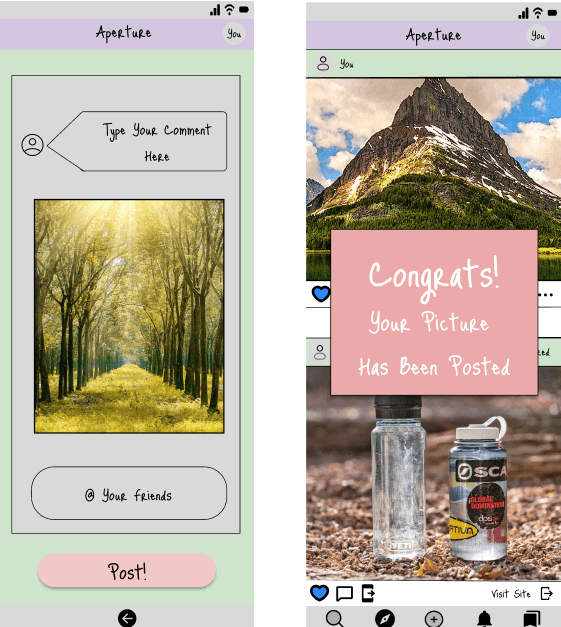
User Testing –
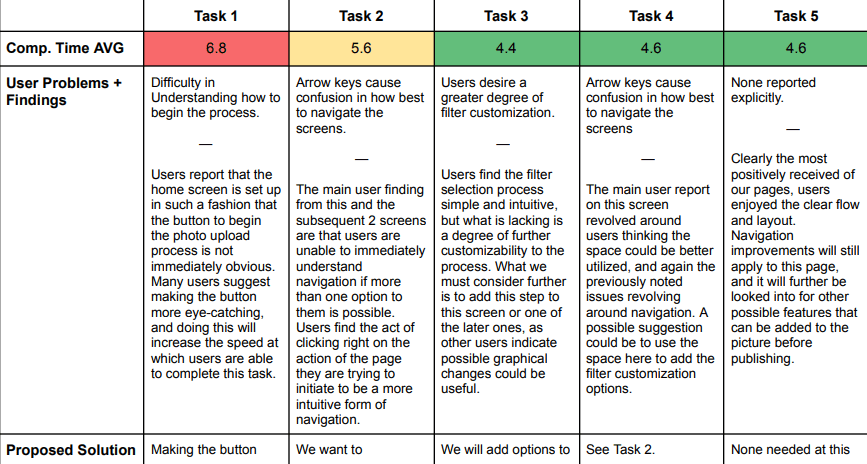
We have identified several aspects in our prototype that function to specification, as well as three main problem areas to address in further
iterations. Most screens are able to be completed in the time frame that we desire and users identify the posting process on the whole as intuitive and easy. The main roadblocks to this positive user feeling is user confusion on how to start the process, navigation, and filter customization. With these changes in mind, we created a second prototype to test.
Full link to testing here, including second round changes and reiteration: Link
4. Conclusions and Next Steps
Our hope is that by initiating research into these changes in our ad labeling design, we can formulate a model that allows us to convey all the necessary information without being off putting to the user. A potential disconnect that
can occur between our research and actual implementation is that the findings that we uncover in our testing could not apply to our actual user base. This is our proposal for a schedule post launch:
Additional Post Launch Activities Will Include –
- KPI Management
- Continued Iteration With User Testing
- User Data Management
- Consultation with Design Teams
- Collaboration with Finance to ensure milestones for revenue are being met.
Takeaways:
The product development lifecycle is one that includes multiple stakeholders, simultaneous planning, and continued revision. This project took me from conception to arranging to executing a complete product feature improvement cycle. I’m continually impressed by the product manager’s role in terms of it holistic value – many different business functionalities come together in order to slowly begin tackling the improvement cycle. I learned a large deal and I am excited to begin tackling more complex projects/products and posting them here!
 Mustafa Mahmood